Keeping your vehicle safe and legally compliant matters to most drivers, but what does the law say? In Dayton, inspections can become a question after fender benders, major collisions, or title transfers. So, does Ohio require vehicle inspections? That depends on where you live and the type of vehicle you’re driving. At Dyer, Garofalo, Mann & Schultz, we’re here to guide you through what Ohio’s rules mean for your situation.
Ohio doesn’t impose a statewide rule requiring regular safety checks for non-commercial vehicles. So, unless your car falls into a specific exception, you’re not legally required to complete an annual inspection in Ohio.
Also, Ohio doesn’t require yearly safety inspections for privately owned vehicles. However, cars with out-of-state titles might need to be inspected when registering them in Ohio.
That said, there are circumstances when earlier testing may be needed. According to the Ohio Environmental Protection Agency, vehicles should be tested ahead of schedule if they’re going out of state for the winter, used by college students temporarily living in non-testing areas, or showing signs of mechanical issues like a check engine light. Testing is also suggested for drivers leaving Ohio for extended work travel or to care for family members during long-term medical situations.
These exceptions often raise the same question for Ohio drivers: Does Ohio require vehicle inspections when moving, registering, or preparing for travel?
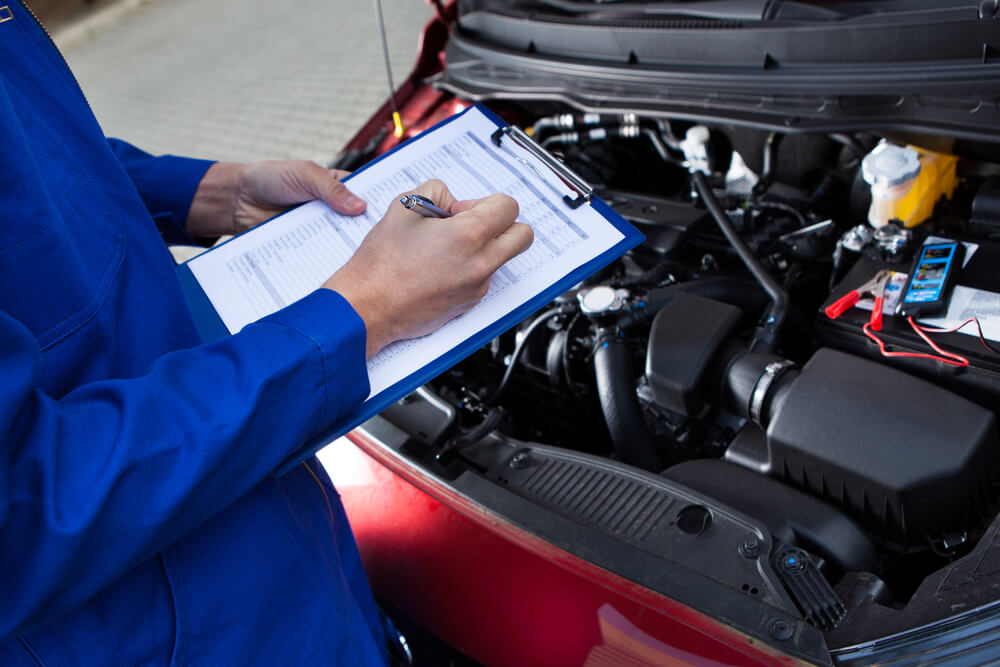
Ohio doesn’t enforce a statewide policy requiring regular safety inspections for non-commercial vehicles. That said, some counties do take part in an emissions testing system known as Ohio E-Check. This program applies to certain vehicles, and inspections may be necessary when registering cars brought in from another state. Counties currently involved include Cuyahoga, Geauga, Lake, Lorain, Medina, Portage, and Summit.
As noted by the Ohio Environmental Protection Agency (Ohio EPA), new legislation extends emissions testing exemptions from 4 to 6 years for gas and diesel vehicles, and 7 years for non-plug-in hybrids. For registrations on or after June 29, 2025, testing begins with model year 2019 for gas/diesel and 2018 for non-plug-in hybrids. Vehicles aged 4–5 years registered before that date must still test in 2025.
E-Check remains required for 4–25-year-old gas and diesel vehicles under 10,000 lbs GVWR, including non-plug-in hybrids, if registered in an E-Check county.
Ohio requires a VIN (Vehicle Identification Number) inspection when a vehicle is brought in from another state or when transferring ownership in specific situations. This process confirms that the VIN on the car matches official records. It’s not a full safety or emissions test, but it’s mandatory for many title and registration changes.
Emissions testing is required in designated counties under the E-Check program. Vehicles falling under the program’s requirements must pass this test before registration can be completed. Ohio does not perform out-of-state inspections on vehicles that already have Ohio titles.
If the Ohio State Highway Patrol determines that a vehicle appears unsafe, they may also require a safety inspection. This is not a routine process, but it may occur if an officer suspects the vehicle is hazardous while on the road.
While safety inspections aren’t part of a statewide mandate, routine maintenance still plays a crucial role in keeping your car roadworthy and reducing the risk of mechanical failure, especially after an accident.
After a crash, your vehicle’s safety features, or lack thereof, can directly impact your case. Insurance companies and investigators may evaluate whether poor vehicle maintenance contributed to the crash or made injuries worse.
Suppose your brakes were already worn down, or a tire blowout caused you to lose control. That could complicate how fault is determined or how much compensation you can receive.
In Dayton, where winter roads and highway traffic add extra hazards, regular inspections can protect more than your car and your legal interests. Even if Ohio doesn’t require it, showing a history of vehicle maintenance might help prove you weren’t negligent.
It’s also worth thinking about how often you ask yourself, does Ohio require vehicle inspections in light of how your vehicle might be evaluated in unexpected legal situations. That awareness can make a huge difference after a serious crash.
When your car’s condition is being reviewed following a collision, it’s important to understand your legal rights. AtDyer, Garofalo, Mann & Schultz, we help Dayton drivers handle every angle of a crash. Whether your vehicle needed testing or not, you deserve someone who can explain the next steps clearly.
Still wondering, does Ohio require vehicle inspections in your situation? Contact us today at 1.937.222.2222. Schedule a free consultation.
Call a car accident lawyer near you:

Before establishing Dyer, Garofalo, Mann & Schultz L.P.A., Doug Mann, a top Ohio Injury Attorney served as a bodily injury claims adjuster at a major insurance firm. With over 40+ years of experience, Doug’s background has proven invaluable in securing maximum cash settlements for his clients swiftly. Since leaving the insurance industry, Doug has devoted his entire legal career to assisting injured clients during their times of greatest need.

This page has been written, edited, and reviewed by a team of legal writers following our comprehensive editorial guidelines. This page was approved by Founding Partner, Doug Mann who has more than 30 years of legal experience as a practicing personal injury attorney.
Keep up to Date with Our Newest Firm Updates
Key Takeaways Move your vehicle to a safe location and turn on hazard lights before doing anything else. Ohio law requires reporting a deer strike within 24 hours to claim […]
Key Takeaways A t-bone accident occurs when the front of one vehicle strikes the side of another, usually at an intersection. Liability typically falls on the driver who failed to […]
Key Takeaways. Ohio pedestrians can pursue a claim or lawsuit against a driver when negligence and evidence support it. Drivers and pedestrians can share fault, and Ohio law reduces compensation […]
If you or a loved one has been seriously injured, please fill out the form below for your free consultation or call us at 1.937.222.2222

 call us: