After a truck accident, the million-dollar question is: who is liable in a truck accident? Due to the involvement of so many parties, finding out who is at fault can be a little more complex than just determining liability. At Dyer, Garofalo, Mann & Schultz, we take the burden off your shoulders and help you take necessary steps in Ohio to protect your rights and to win compensation.
Trucking accidents generally involve many different responsible parties for various reasons. In contrast to an average car accident, the liability of a trucking accident is rarely clear-cut. The fault usually requires detailed investigation and expertise regarding federal and Ohio regulations controlling trucking. Due to the rigorous oversight of trucking companies and drivers, compliance violations may include potential factors for liability.
According to the NCS, in 2022, there were 5,837 large trucks involved in fatal crashes, increasing 1.8% from 2021 and 49% over a decade; this count includes both commercial and non-commercial trucks. Because of their size and weight, commercial vehicles usually cause worse injuries compared with a standard car accident, which raises the bar for investigations and accountability.
The victims usually face long recovery, expensive medical treatment, and psychological trauma. Trucking accidents also raise intricate legal issues because of the federal and state regulations involved, adding to the already complicated issue of liability.
Car accidents involve fewer responsible parties, usually limited to the drivers. In a truck accident, liability may go beyond the driver to include employers, manufacturers, or others. Trucks are much larger and heavier, and because of these increased risks, safety standards imposed are more stringent, and the damages are often more significant. In addition, mechanical defects or improper cargo loading are more common in truck-related accidents.
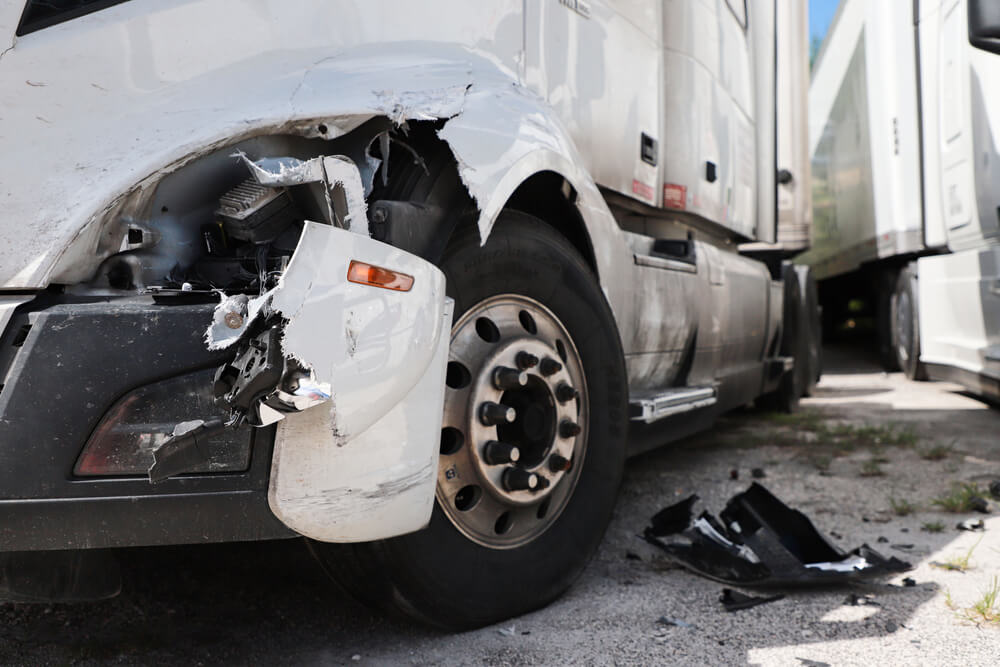
Whenever liability is tried to be determined in truck accident cases, different entities come into the limelight depending on the situation.
Truck drivers have strict regulations about rest breaks, drug use, and safe driving on the road. If a semi-driver fails to follow the rules through negligence, he can also be held liable under negligence. The infraction of the hours of service rule, based on FMCSA, could provide evidence that driver fatigue is causing an accident. Truck drivers may drive for a maximum of 11 hours in a 14-hour work period, provided they have taken a 30-minute break if 8 hours have passed since the last off-duty period. When drivers reach the 11-hour limit, they have to take 10 consecutive hours off-duty.
Common negligences by truck drivers include distracted driving, speeding, and failure to adjust to poor weather conditions. Each one of these significantly contributes to causing the accident.
Trucking companies will also usually be liable for hiring, training, and screening drivers. Lack of background checks or failure to maintain the fleet or abide by regulations will also bring company liability during an accident. Under Ohio’s legal doctrines, employers could also be vicariously liable for the driver’s actions. A trucking company is obliged to ensure its vehicle is regularly inspected and passes safety standards.
Faulty brakes, tires, and other truck parts may lead to horrific accidents. If a manufacturing defect partially caused the crash, then the part manufacturer may be held partially liable under product liability laws. Proper maintenance of the vehicle and periodic inspections will also help a lot in avoiding accidents. Sometimes, a part failed during a critical point because it was poorly designed or manufactured.
Poorly secured cargo can shift onto the road and increase the chance of a rollover or collision. Safety depends on careful observance of federal loading standards. Liability may fall on those responsible for loading the truck. The way to avoid such hazards is through observance of the weight and load distribution limits prescribed by federal regulations. For example, overloading cargo can put excessive pressure on the truck’s tires and brakes, leading to increased accident rates. Cargo-related hazards are especially pernicious because they can affect other motorists on the road.
In other cases, road conditions or other drivers on the road may partially cause the accident. For example, a pothole that causes a truck to swerve can make the government agency partially responsible for maintaining that particular stretch of highway. In other cases, a sudden lane shift or tailgating by another vehicle may constitute the negligent act that causes a collision and further complicates the question of fault.
It requires proof and sometimes legal analysis to decide who is liable. Ohio comparative negligence laws allow the allocation of fault to more than one party. You can still recover damages if you were partially responsible for the accident, provided your share of fault is less than 50%.
Evidence that may be used to establish liability includes police reports, video, witness statements, and expert testimony. Accident reconstruction experts are commonly hired to evaluate what happened, especially in complicated cases with multiple vehicles or disputed versions of how the accident occurred. Additionally, ELDs in trucks can provide crucial data regarding driver and vehicle actions before the collision.
Ohio’s comparative negligence system reduces your compensation by your share of the fault. For example, if you get $100,000 awarded and are determined to be 20% at fault, you will get $80,000. This would put the burden of accountability on all parties accordingly. This also pinpoints the development of a strong case in minimizing the percentage of fault placed upon you, thus maximizing recovery.
When multiple parties can be held liable, claims become more complicated. A qualified attorney must investigate the accident, identify responsible parties, and negotiate with their insurance companies. Compensation would have to be sought from the trucking company and third-party contractors. Many multi-party cases demand a strategic approach in which several different insurers may file claims and work together to assure comprehensive compensation.
Fault is established through evidence such as police reports, driver logs, maintenance records, and eyewitness testimony. Your lawyer might also want accident reconstruction experts who help explain just what happened when the accident occurred. This gives a clear trail leading up to negligence, and it will hold the responsible parties accountable.
Yes, truck drivers may be held liable if the accident occurred due to their negligence; however, their employer or other parties could sometimes share that responsibility based on the circumstances. For example, perhaps the trucking company would bear liability if a driver was within the scope of his employment.
The settlement amount can vary significantly depending on the degree of injury, property damage sustained, and the amount of parties liable. Generally, truck accident settlements tend to be much higher than car accident settlements due largely to the extent of the damages. Compensation may include medical expenses, lost wages, pain and suffering, and any other losses.
Do not go through this tricky process alone if you wonder who is liable after a truck accident. Dyer, Garofalo, Mann & Schultz have the experience and local-based capabilities to advocate for any Dayton truck accident case. Reach our team today at 131 N Ludlow St. #1400, Dayton, OH, 45402, or give us a call at 1.937.222.2222 for a free consultation.
Before establishing Dyer, Garofalo, Mann & Schultz L.P.A., Doug Mann, a top Ohio Injury Attorney served as a bodily injury claims adjuster at a major insurance firm. With over 40+ years of experience, Doug’s background has proven invaluable in securing maximum cash settlements for his clients swiftly. Since leaving the insurance industry, Doug has devoted his entire legal career to assisting injured clients during their times of greatest need.

This page has been written, edited, and reviewed by a team of legal writers following our comprehensive editorial guidelines. This page was approved by Founding Partner, Doug Mann who has more than 20 years of legal experience as a practicing personal injury attorney.
Keep up to Date with Our Newest Firm Updates
Key Takeaways Ohio law requires drivers hold a valid license to operate a motor vehicle. Forgetting a license differs legally from driving without valid driving privileges. Police usually verify license […]
Key Takeaways Serious car accident injury interferes with mobility or cognitive function. Severe crash injuries may require surgery or extended medical care. Traumatic brain injury occurs when a blow or […]
Key Takeaways A semi-truck pairs a tractor with a detachable trailer to haul freight. A semi-trailer relies on the tractor to support its front portion. A fully loaded semi-truck requires […]
If you or a loved one has been seriously injured, please fill out the form below for your free consultation or call us at 1.937.222.2222